How to build a culture of Do-ers?
Aug 2025
GBP Computer Science Club Year 1 Reflection
The whole is greater than the sum of its parts — Aristotle
A little recap
During the year 2024-2025, the GBC CS Club has seen success, new members, and interests. And now that the club is passed along, our current executives aim to understand and answer a very important question regarding the club itself. The goal is to establish a strong foundation that enables the club to “run by itself” regardless of who the next generation of executives or members are.
Previous executives had brought the club to life with strong dedication. But the concern is that the next unforeseen generation of leaders might have difficulty keeping up, due to schoolwork and personal life. We don’t mean to disdain our future member or anyone involved. But rather, we’re trying to build an environment where passion and interest can grow effortlessly. However, this task is unrealistic without addressing the problems we’ve faced and setting up a simple underlying structure first. Therefore, this piece of writing is my invitation for insights from the community.
Throughout the school year, we organized various events and activities as planned the summer before. We create a software development competition focused on creating a complete application with specific requirements. Then we organized a weekly meeting in the form of a project showcase. A couple of personal projects showed up, and a few more started as a collective effort under the club itself. After, there are academic sessions. Executives gave lessons on topics we’re interested in (mainly deep learning), and Prof. Andrew was also kind enough to conduct a lesson on local LLMs when the technology was still relatively new. To finish it off, there was the creative coding challenge, where people compete to create the best generative art using tools like P5.JS as a programmable canvas.
Creator and consumer
Since the club has just started, these might seem like some wonderful achievements, which they are, and we’re proud of them. But the underlying issue is that the club is now back to where we started. Although we’ve found highly committed members and our executives are willing to devote their time to make the club better, it doesn’t last forever. Club announcements receive very little engagement, discussions outside of the meeting rarely happen, and events would not occur if the executive didn’t come up with anything. The inherent issue, as we believe, is that we’ve slipped into a cycle of creator and consumer dynamic that was caused by us, the executives.
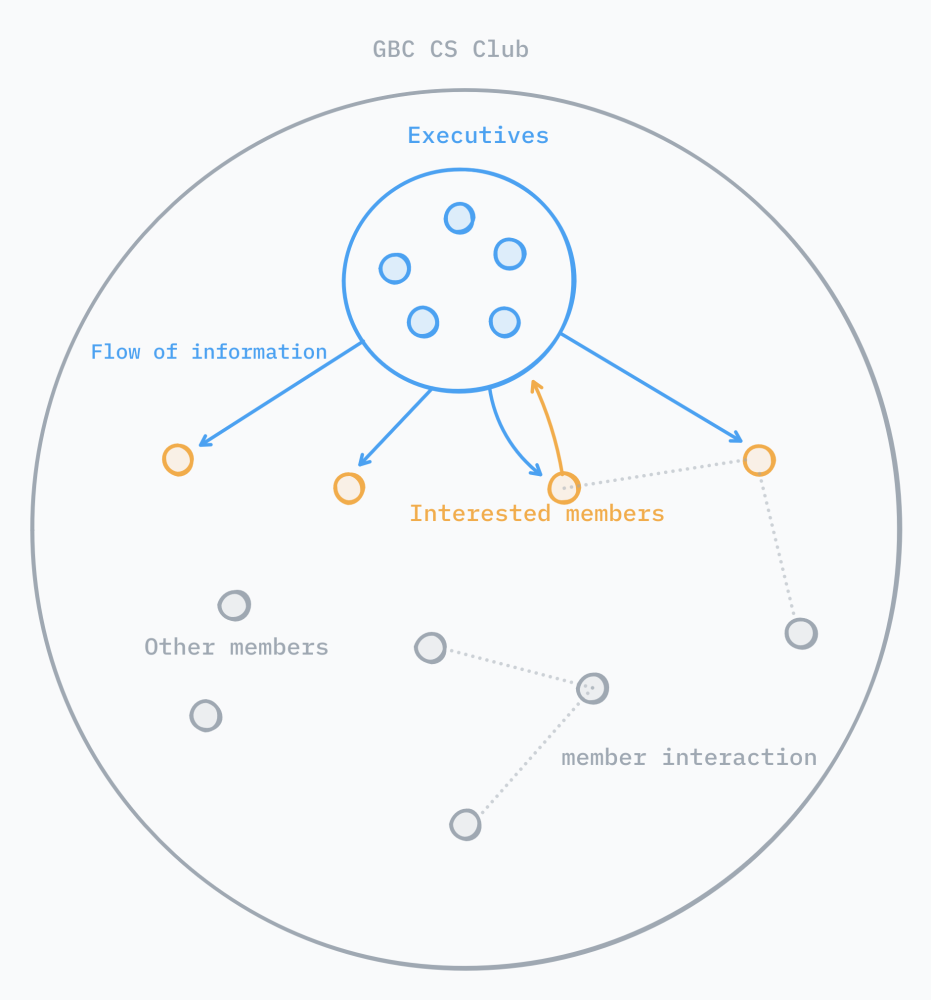
Most of our events require very little work, and so we never thought of getting anyone involved in organizing them. And as the time went by, members became reliant on us. They wait for us to organize events and produce materials for more academic sessions. They came to the meetup hoping for us to bring in an interesting presentation. Suggestions became more focused on us (the executive) implementing them rather than an initiative a member would take. Our perception of growth was not how coherent and interactive the club is, but how many competitions we’ve created, how many lessons we’ve taught, and how large the audience was. We don’t want the club to just be another classroom or boot camp, but there simply aren’t any good structures that enable involvement from club members.
Motivation
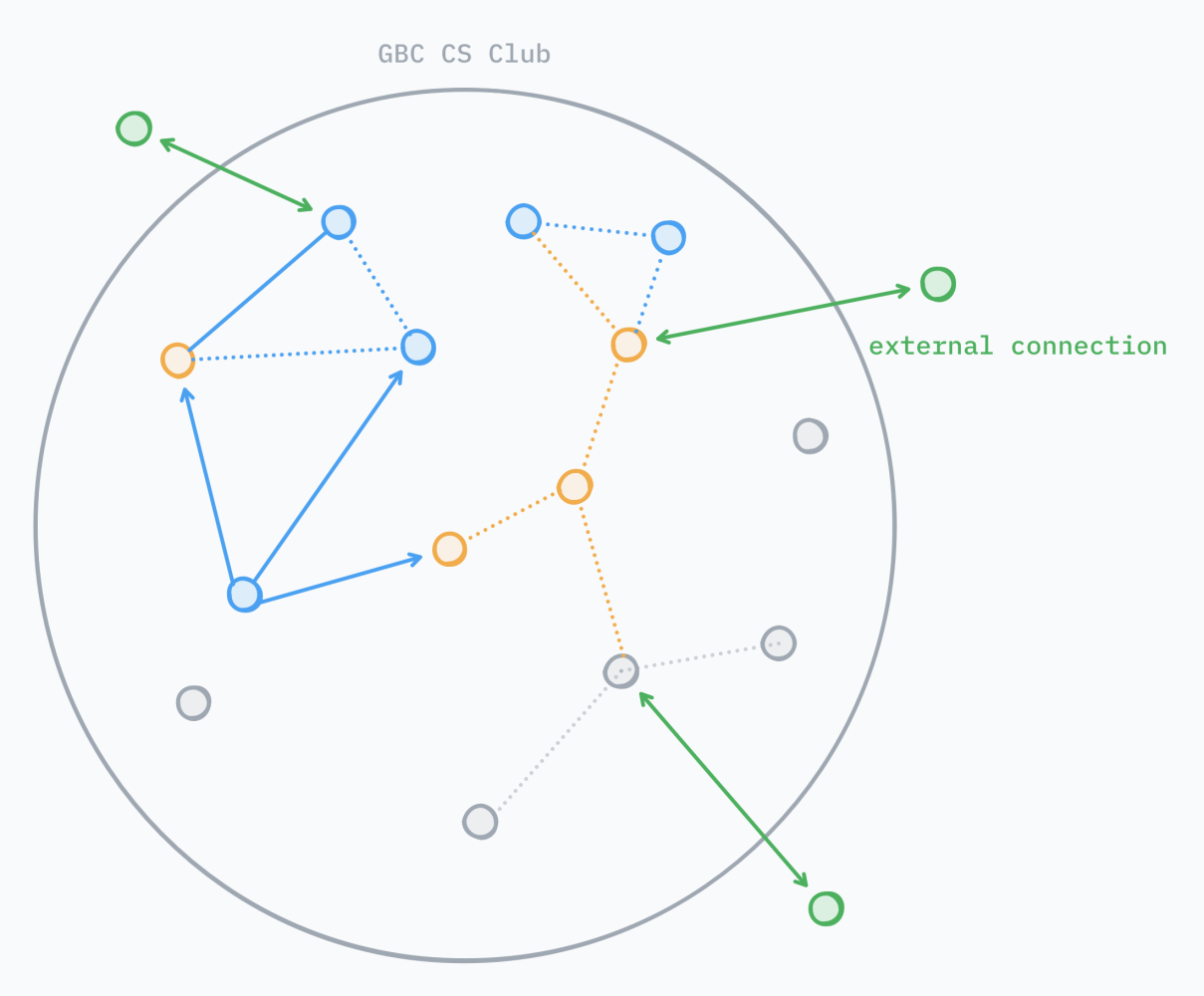
Our first instinct was to flip the arrow and ask our members to create. But everything comes down to the question of motivation. It’s reasonable to wonder if working on a club project was better than one’s own, if arranging a talk was worth the effort, or if commuting to the campus make sense at all. In the end, these were variations of the bigger question: “What can the club offer?” Currently, it’s easier to ask a friend directly to work on a project instead of doing it under the club. Members have also participated in events and competitions in a similar way. Beyond motivation, the club doesn’t feel personal enough for our members to be involved with. Messages on our official Discord server castes away like noises. And most people don’t usually bother with online group messages. This is, of course, our assumption. But it still leads to fewer initiatives being created, shared, and taken. Together with our one-way dynamic, these might have been the reason the club fell short and requires constant fueling from the executives.
Our first step
Beginning this fall semester (2025), we’ve created basic plans and actions to address the problem. Our first step is to change our responsibility from programmers to managers. Events and projects will be distributed to members directly, which then allows them to recruit more people if required. Projects are tapped into the club resources including budget, specific approvals, and external contacts. These contributions might be small, but it is essential to gather interactions, talents, and interests which should prepare us for something more practical later.
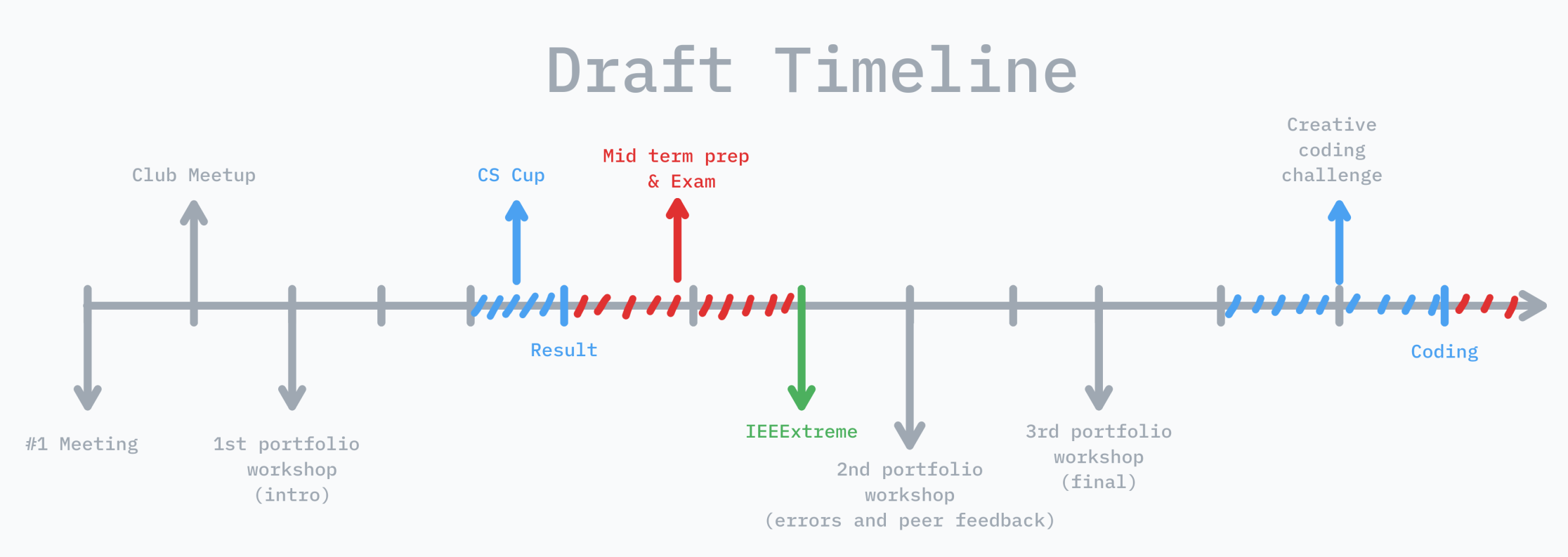
Further down the road, we can utilize our budget to create funding programs that encourage external networking. For example, traveling or food expenses will be covered if they’re for engaging in networking events or competitions. Representing the club in these activities can bring us practical opportunities with the industry that our members can participate in. Workshop sessions will now focus on preparing our members specifically for these projects.
My final thought
I’ve gathered suggestions and recommendations from friends and professors on this matter. And this is an additional attempt before the school starts. Outside perspectives and experiences are welcome.
I rarely take on a leadership position at this scale, and often my ego is in the way. I hope to document this journey with its experiments and failures as guides for anyone who finds themselves here.
The GBC Computer Science Club is available to all George Brown Polytechnic students. Please contact us at our email: gbccsclub@gmail.com
P.S.
My recent interest in emergence properties caught my attention in some details. Complex, and often beautiful behavior can occur from a system with simple interactions (local rules) between its parts. The current one-way interaction of the club restricted emergence behavior. Whatever is the local rules required, it has to apply to most, if not every one of the parts (our club members).